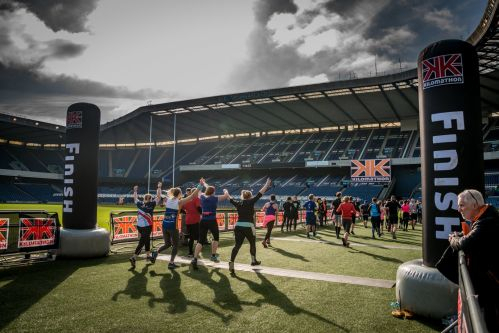
The Kilomathon is one of Scotland’s most distinctive and innovative running events, offering a unique distance format that bridges the gap between traditional road race lengths. Designed to appeal to runners seeking a fresh challenge, the Kilomathon has played an important role in diversifying Scotland’s running calendar. Its history reflects changing attitudes toward endurance events, participation, and race accessibility.
What Is the Kilomathon?
The Kilomathon is a road running event based on a distance of approximately 13.1 kilometres, or roughly 8.1 miles. Positioned between a 10K and a half marathon, the Kilomathon was created to provide an alternative for runners looking to progress beyond shorter races without committing to half marathon training.
Held in Scotland, the event has historically featured courses designed to balance challenge with accessibility, making it suitable for both experienced runners and those stepping up in distance.
Origins of the Kilomathon Concept
The Kilomathon was introduced during a period of rapid growth in recreational running. As more people began entering 10K races, organisers identified a gap for an intermediate distance that offered a meaningful challenge while remaining achievable for a wide audience.
The Kilomathon concept was designed to encourage progression in running participation. By offering a distance longer than 10K but shorter than a half marathon, the event appealed to runners seeking a new goal without the time commitment required for longer races.
Course Design and Runner Experience
Course design has always been central to the Kilomathon’s identity. Routes were selected to provide a mix of urban and scenic environments while maintaining a manageable elevation profile. This approach ensured the race remained challenging yet welcoming, particularly for runners new to longer distances.
The focus on runner experience extended beyond the course itself. Event organisation emphasised clear signage, well-spaced aid stations, and supportive volunteer presence, helping to build confidence among participants.
Role in Scottish Running Development
The Kilomathon has played an important role in Scotland’s running development pathway. Many runners have used the event as a stepping stone between 10K races and half marathons, using it to build endurance and confidence.
This progression-focused approach aligns with broader trends in running participation, where gradual goal-setting and achievable milestones encourage long-term engagement in the sport.
Participation Growth and Popularity
At its peak, the Kilomathon attracted thousands of runners, including club athletes, recreational participants, and charity fundraisers. The event’s distinctive distance helped it stand out in a crowded race calendar and fostered a loyal participant base.
Its popularity demonstrated that runners were receptive to non-traditional distances, particularly when events were well-organised and clearly positioned within the running ecosystem.
The Kilomathon’s Legacy
Although the Kilomathon has not always been a permanent fixture in the race calendar, its impact on Scottish running is significant. The event helped challenge assumptions about standard race distances and showed that innovation could drive participation.
The Kilomathon’s legacy can be seen in the continued popularity of intermediate and alternative distance races across the UK.
The Kilomathon Today
Today, the Kilomathon is remembered as a pioneering event that expanded the possibilities of road running in Scotland. Its history highlights the importance of creativity and inclusivity in event design and its influence continues to shape how organisers approach new race formats.